What Your House Is Trying to Tell You: Seven Small Problems That Can Become Major Renovations
A home rarely fails all at once. It gives subtle signals first. Knowing how to read them can save a great deal of disruption later.
A sticking door or hairline crack may be nothing. But when small signals repeat, spread, or show up alongside moisture, they are worth understanding. Attention early gives you more options later.
This is not a reason to panic or assume the largest possible repair. It is a reason to observe carefully, take photographs, and bring in the right professional when a pattern emerges. A well-timed investigation can protect both your house and your renovation budget.
- 1
Grout that keeps cracking
One isolated crack may be cosmetic. Repeated cracking, loose tile, or stains at a shower edge can point to movement or a failed water-management layer beneath the surface.
- 2
A room that is always damp or stuffy
Persistent humidity can affect comfort, paint, woodwork, and indoor air quality. Look at ventilation, duct performance, insulation, and possible sources of moisture.
- 3
Doors or windows that suddenly bind
Seasonal expansion is normal. A new or worsening change deserves a closer look, especially when it appears with cracks around openings or uneven floors.
The most useful home-maintenance habit is simple: notice what changes, and do not wait for a small clue to become a dramatic symptom.
Four more clues to put on your list
Watch for paint that bubbles or peels in the same spot, a faint musty odor, a circuit that trips repeatedly, and water that moves toward the foundation after rain. Each may have a straightforward fix. Each can also become more expensive when ignored.
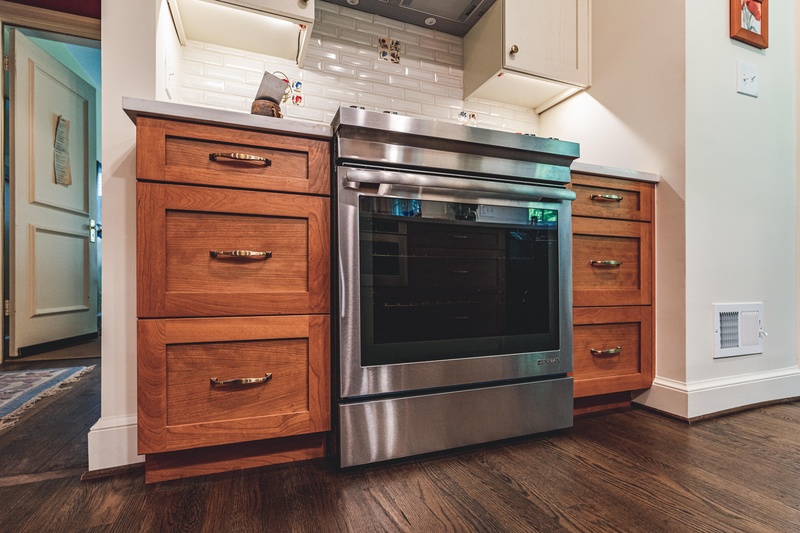
In kitchens, note drawers that no longer line up, cabinet bases that feel soft, or appliance areas that are unusually warm. In bathrooms, look under sinks, around toilet bases, and along caulk lines. These are easy places for a small leak to hide.
Turn observation into a plan
Keep a simple record: the date, the location, what changed, and a photo. If a repair is needed, ask what caused the symptom, not only what will cover it. That question is especially valuable before investing in new finishes.
When you are already considering a renovation, these signals can help set priorities. Addressing drainage, ventilation, electrical capacity, or framing at the same time as a visible update often protects the finished space and avoids reopening it later.
Seeing patterns in your home that you cannot explain?
FineCraft can help you evaluate the visible issue and plan for the work behind it.
Talk With Our Team >