Have you ever walked into a high-end showroom or a designer kitchen and felt an immediate sense of warmth and “wow” factor, but couldn’t quite put your finger on why?
Often, it’s not the expensive marble or the custom cabinetry doing the heavy lifting—it’s the lighting.
Most homeowners make the mistake of treating lighting as a utility: you flip a switch, and the room gets bright. But in professional remodeling, we treat lighting as a design element. To get that sophisticated, inviting look, you need to follow the “Rule of Three.”
Here is how to layer your lighting like a pro.
1. Ambient Lighting: The Foundation
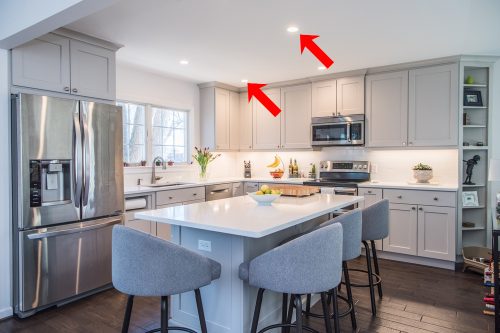
Ambient lighting is your primary source of light. Its job is simple: make sure you aren’t walking into furniture in the dark. In a modern kitchen, this is usually achieved through recessed “can” lights or a large central fixture.
The Pro Tip: Always install your ambient lights on a dimmer switch. This allows you to transition the kitchen from a bright, high-energy breakfast spot in the morning to a soft, moody space for dinner and drinks at night.
2. Task Lighting: The Function
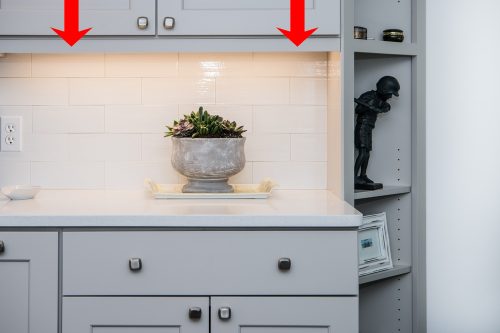
This is the most frequently overlooked layer, yet it’s the most important for daily use. Ambient light comes from above, which means when you stand at your counter to chop vegetables, you’re casting a shadow over your workspace.
Task lighting solves this. The gold standard here is under-cabinet LED strips. They illuminate your countertops directly, providing a clear, shadow-free surface for prep work.
The Pro Tip: Use a “cool” or “neutral” white for task lighting. It helps you see the true color of your food and keeps the workspace feeling clean and sharp.
3. Accent Lighting: The “Jewelry”
If ambient lighting is the foundation and task lighting is the function, accent lighting is the personality. This layer is designed to draw the eye to specific architectural features or simply look beautiful.
Common examples include:
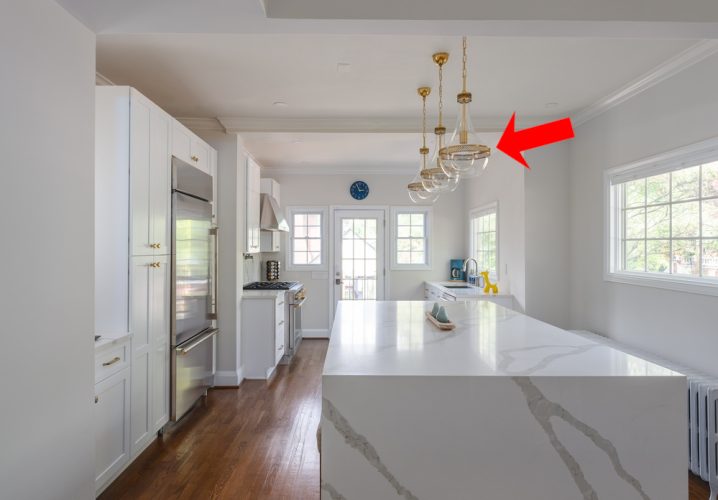
Pendant Lights: The statement pieces hanging over your kitchen island.
Toe-Kick Lighting: LEDs tucked under the base cabinets that make the island look like it’s floating.
In-Cabinet Lighting: Soft lights inside glass-front cabinets to showcase your favorite glassware.
The Pro Tip: Think of pendants as the “jewelry” of the room. They don’t need to provide all the light; they just need to look stunning and provide a warm glow at eye level.
Why It Matters for Your Remodel
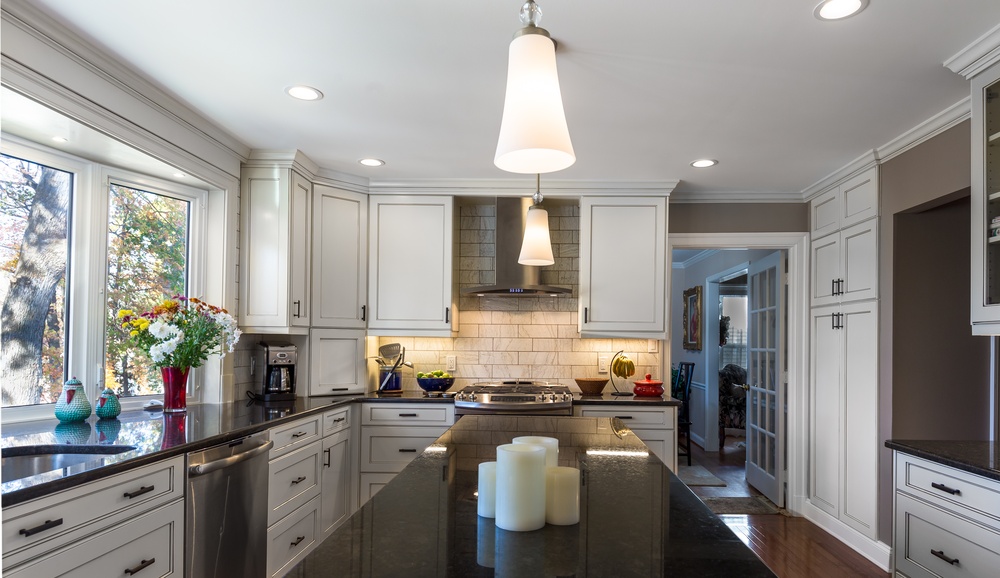
When you combine these three layers, your kitchen gains depth. Without layering, a kitchen often feels “flat” or clinical—like a high-end operating room. With layering, you have total control over the atmosphere. You can keep the task lights on while you cook, then turn them off and dim the pendants and toe-kicks when guests arrive for a lounge-like vibe.
Ready to Start Your Project?
Choosing the right materials is one of the most important decisions in any outdoor project. Understanding how pressure treated lumber has evolved—and how it performs alongside modern alternatives—allows you to make informed, confident choices for your home.
If you’re considering a new deck or an outdoor renovation, the team at FineCraft Contractors is here to guide you through material selection, design, permitting, and construction with clarity and craftsmanship at every step.
DMV: 📞 (301) 215 23 61
FLORIDA: 📞 (727) 591 39 29
💬 Schedule your free initial consultation or request an estimate:
👉 https://finecraftcontractors.com/contact/