For many homeowners, remodeling starts with a simple feeling: something about the house no longer works the way it should.
That was exactly the case for this longtime homeowner, who had lived in the same house since 1988. Surrounded by nature yet close to Washington, DC, the location was perfect — but over time, the interior began to feel dark, compartmentalized, and outdated.
What followed was a complete transformation focused on openness, functionality, aging-in-place planning, and craftsmanship. Along the way, this project also revealed several smart remodeling lessons homeowners can apply to their own renovations.
The Problem: Low Ceilings and a Closed-Off Layout
Originally, the home featured:
- An 8-foot ceiling throughout the main living area
- A separated kitchen boxed in by walls
- Structural ceiling trusses every six feet
- Limited visual connection between spaces
- Aging exterior materials and roofing
The homeowners loved entertaining, but guests always crowded into the small kitchen while the rest of the home felt disconnected.
Their goal wasn’t simply to “modernize” the house. They wanted to completely change how the home felt.
And that started with volume.
Remodeling Tip #1: Ceiling Height Changes Everything
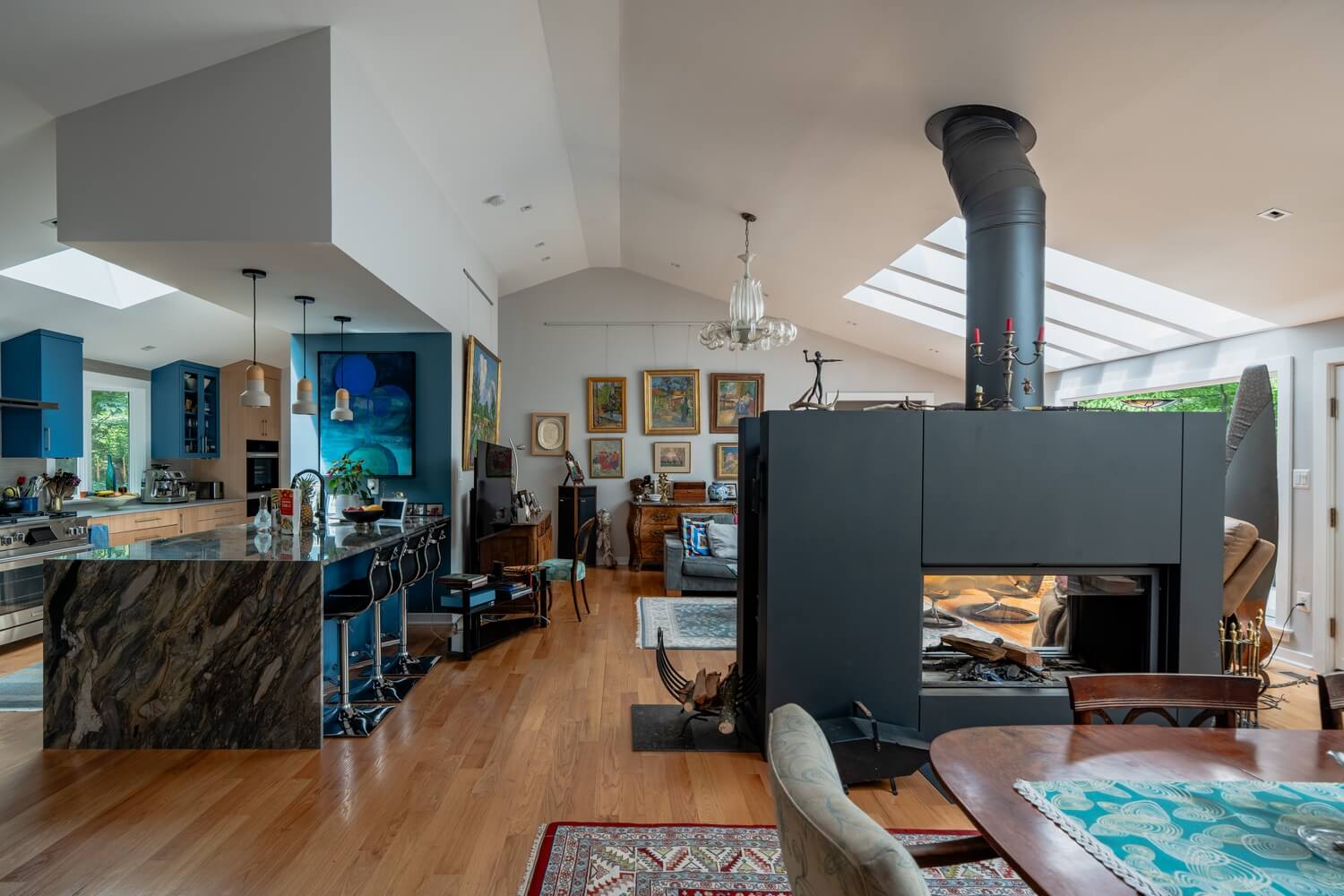
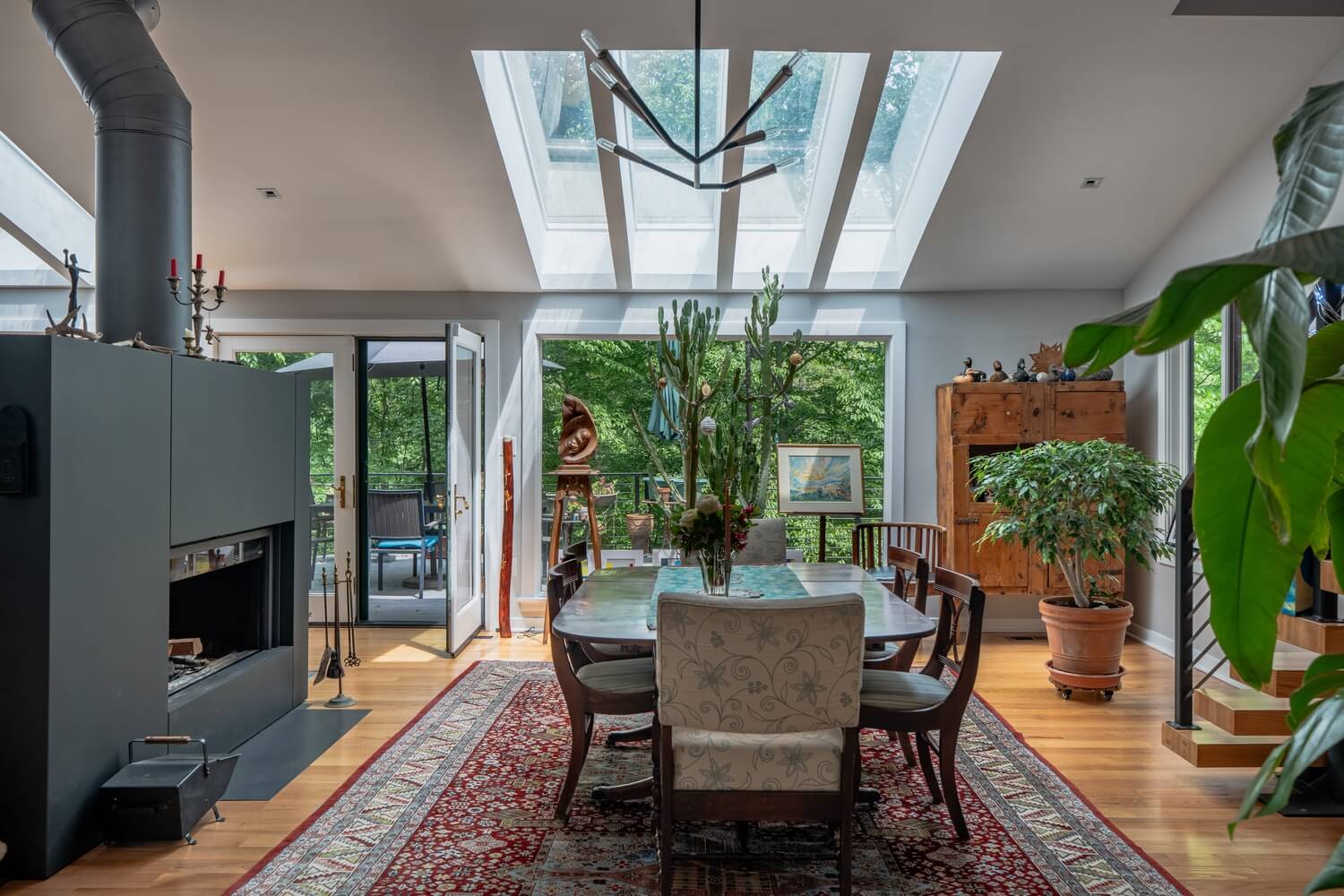
One of the most impactful parts of this remodel was removing the flat ceiling and exposing the roofline above.
Instead of raising the roof itself, the team preserved the existing roofline while opening the interior ceiling all the way to the peak.
That sounds simple in theory — but structurally, it was a major undertaking.
The original ceiling was supported by trusses spaced every six feet. To create the new vaulted space, the construction team carefully:
- Cut an opening along the roof ridge
- Installed a structural beam from above
- Used a crane to position the beam precisely onto load-bearing posts
- Re-engineered the support system without altering the exterior roof profile
The result completely transformed the home.
Why this matters for homeowners
Many people assume they need to build an addition to make a home feel larger. In reality, increasing vertical volume can dramatically change the perception of space without expanding the footprint.
Vaulted ceilings can:
- Bring in more natural light
- Make older homes feel contemporary
- Improve sightlines between rooms
- Create a more luxurious and airy atmosphere
If your home feels cramped despite having decent square footage, look up — not just outward.
Remodeling Tip #2: Open Kitchens Work Best When Designed for Real Living
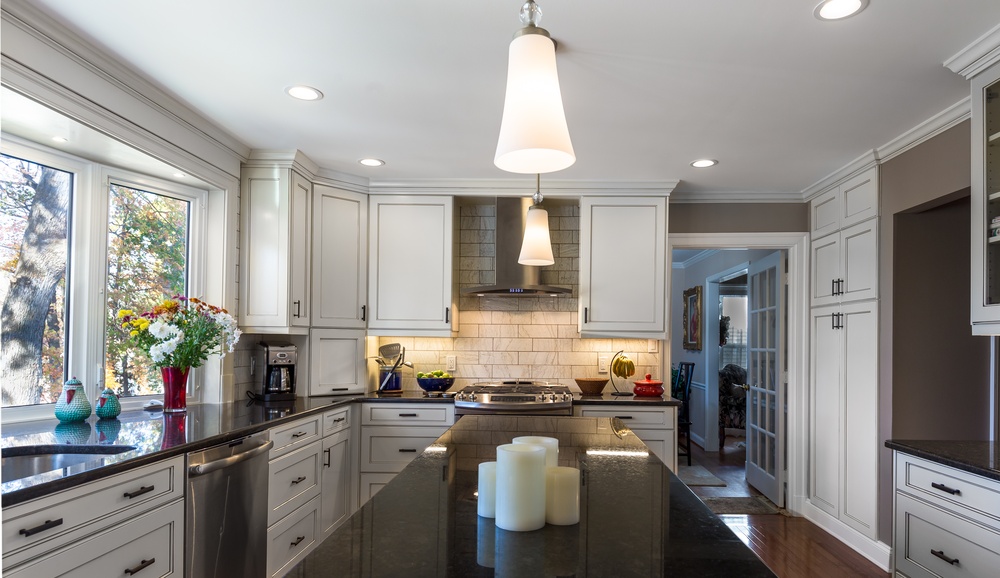
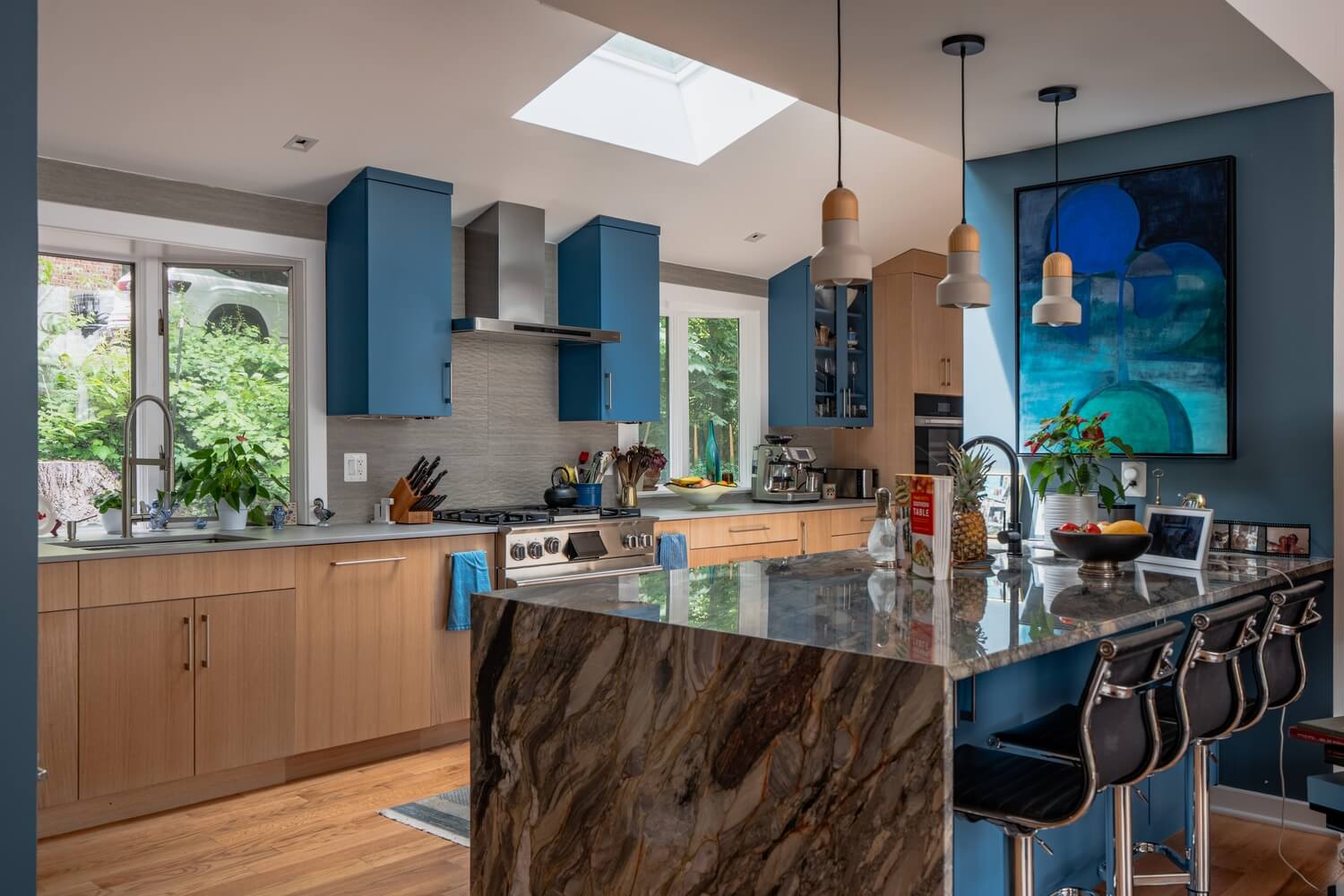
The original kitchen was isolated behind walls. Once opened, it became the centerpiece of the home.
A large granite island now anchors the space, serving as:
- A gathering spot for guests
- Additional prep space
- Casual seating
- A visual focal point
The homeowners described the island as “a work of art,” and that’s exactly how a well-designed island should function.
But the key lesson here is intentional openness.
This wasn’t an open-concept remodel for the sake of trendiness. It was designed around how the homeowners actually live:
- cooking together
- entertaining frequently
- staying connected with guests
What homeowners should consider before removing walls
Before opening a floor plan, think carefully about:
- Traffic flow
- Noise control
- Storage replacement
- Structural implications
- Furniture placement
- Lighting design
Open-concept homes work best when they still provide subtle separation between spaces.
Remodeling Tip #3: Use Architectural Features to Define Spaces Naturally
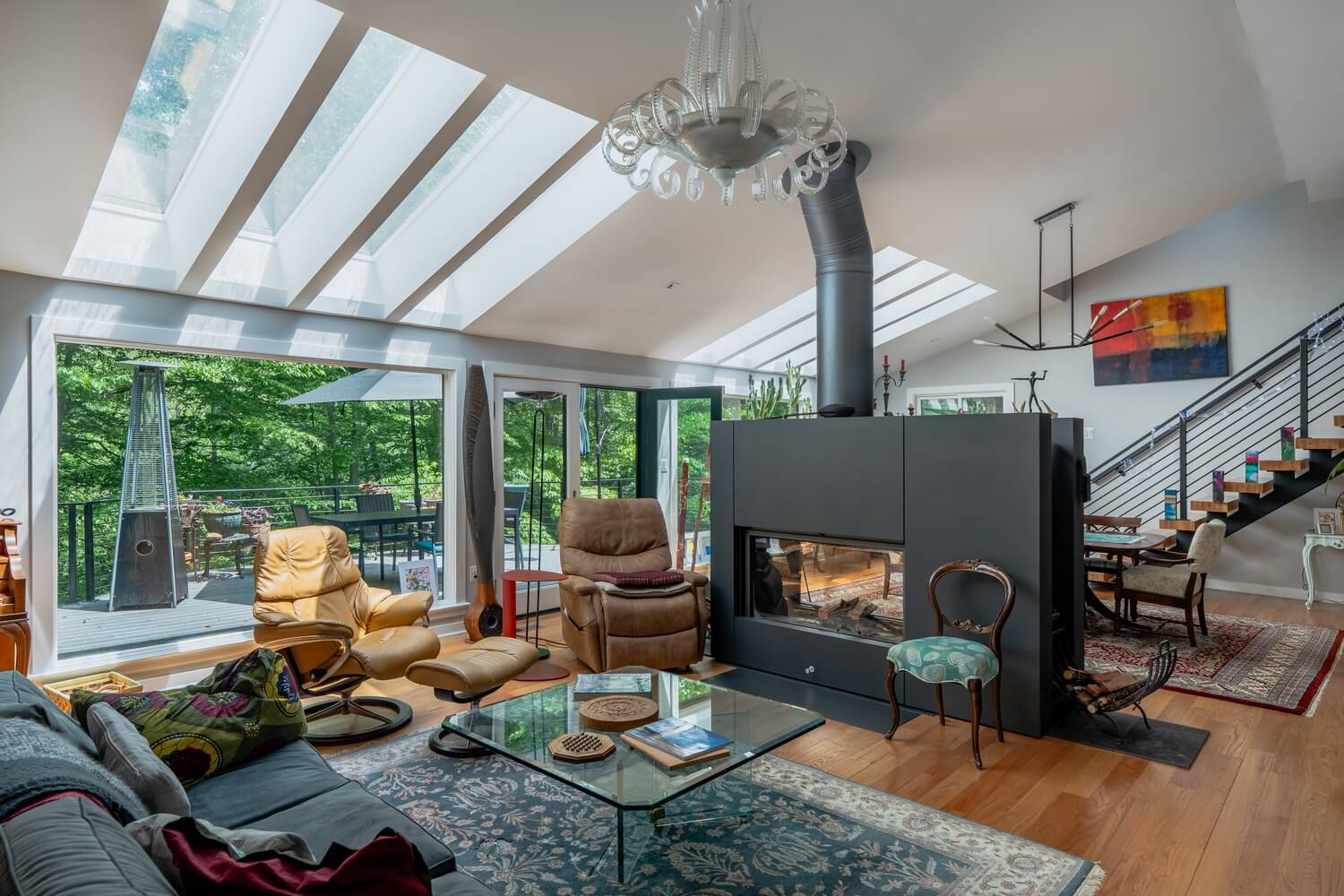
One of the smartest design choices in this remodel was the use of architectural elements to create definition without closing rooms off again.
The homeowners added:
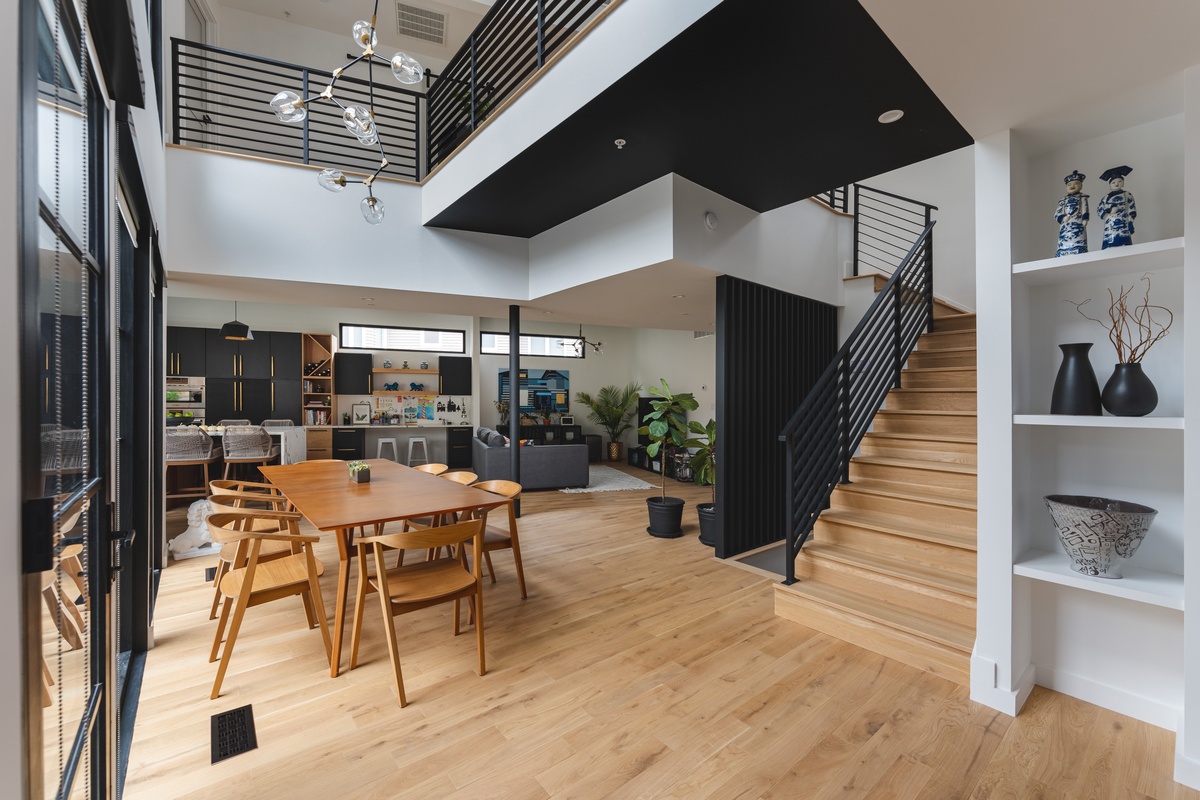
- A sculptural floating staircase
- A modern Belgian stove/fireplace feature
- Strategic lighting and material transitions
These features subtly distinguish the living and dining areas while maintaining openness.
Why this works so well
Modern remodeling often succeeds when spaces feel connected but still purposeful.
Instead of relying on walls, designers can create separation through:
- ceiling variations
- fireplaces
- staircases
- flooring changes
- cabinetry placement
- lighting
- furniture layouts
This creates flow without sacrificing functionality.
Remodeling Tip #4: Plan for the Future — Even If You Don’t Need It Yet
One of the most forward-thinking parts of this project was the installation of a pneumatic elevator.
The homeowners emphasized that they still prefer using the stairs — especially the beautiful floating staircase — but they wanted to prepare for long-term accessibility.
This is one of the smartest investments homeowners can make during a major renovation.
Aging-in-place upgrades to consider
If you plan to stay in your home long term, consider incorporating:
- Wider doorways
- Main-level living options
- Curbless showers
- Better lighting
- Non-slip flooring
- Elevator planning
- Reinforced walls for future grab bars
Doing this during a remodel is significantly easier and more cost-effective than retrofitting later.
Remodeling Tip #5: Don’t Ignore the Exterior During a Major Renovation
While the interior transformation was dramatic, the exterior improvements were equally important.
The original cedar siding had deteriorated over time due to weather exposure and pests. Squirrels had even created openings into the home.
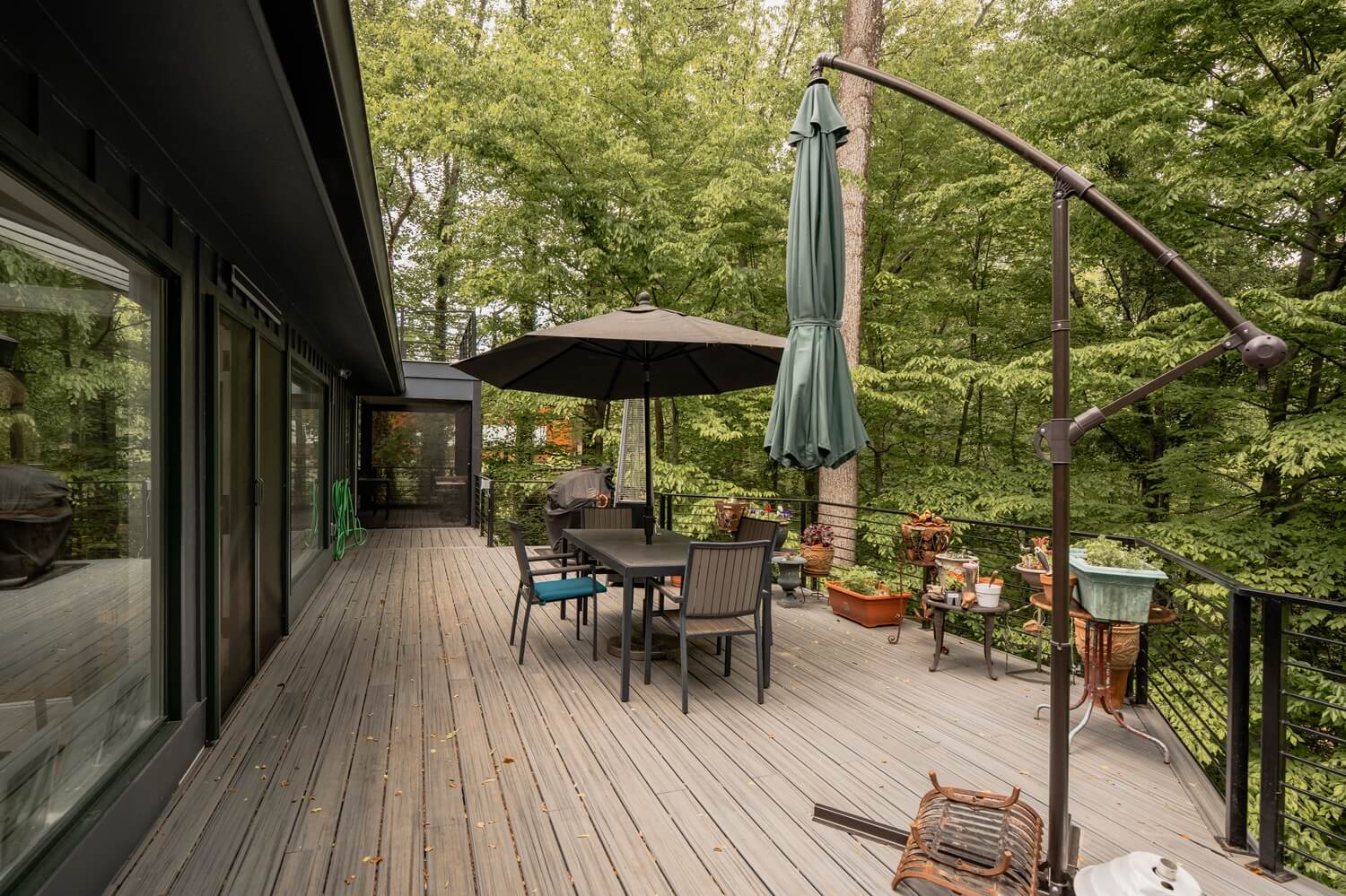
To solve this permanently, the homeowners upgraded to cement board siding and refreshed the roofing system.
Why durable exterior materials matter
Choosing long-lasting exterior products can reduce:
- Maintenance costs
- Moisture problems
- Pest intrusion
- Paint deterioration
- Long-term repair expenses
For homes exposed to harsh weather conditions, investing in durable siding and roofing materials often delivers major long-term value.
Custom Craftsmanship Makes the Difference
One detail the homeowners repeatedly emphasized was craftsmanship and attention to detail.
Custom welded railings, handcrafted metalwork, deck construction, and meticulous finishing work elevated the entire remodel beyond a standard renovation.
Even paint finishing received multiple rounds of refinement to achieve perfectly smooth surfaces.
What homeowners should look for in a remodeling contractor
Beyond design capability, pay attention to:
- Communication consistency
- Project supervision
- Willingness to revisit details
- Craftsmanship quality
- Problem-solving ability
- Structural expertise
- Follow-through after completion
The difference between an average remodel and an exceptional one often comes down to execution.
The Final Result: A Home Designed for the Next Chapter
This remodel didn’t just update finishes.
It completely reimagined:
- how the home functions
- how spaces connect
- how natural light moves through the interior
- how the homeowners entertain
- how the home will support them in the future
Most importantly, it allowed the homeowners to remain in the neighborhood and home they already loved — while making the space finally match the way they wanted to live.
That’s the real power of thoughtful remodeling.
Ready to Start Your Project?
Choosing the right materials is one of the most important decisions in any outdoor project. Understanding how pressure treated lumber has evolved—and how it performs alongside modern alternatives—allows you to make informed, confident choices for your home.
If you’re considering a new deck or an outdoor renovation, the team at FineCraft Contractors is here to guide you through material selection, design, permitting, and construction with clarity and craftsmanship at every step.
DMV: 📞 (301) 215 23 61
FLORIDA: 📞 (727) 591 39 29
💬 Schedule your free initial consultation or request an estimate:
👉 https://finecraftcontractors.com/contact/